
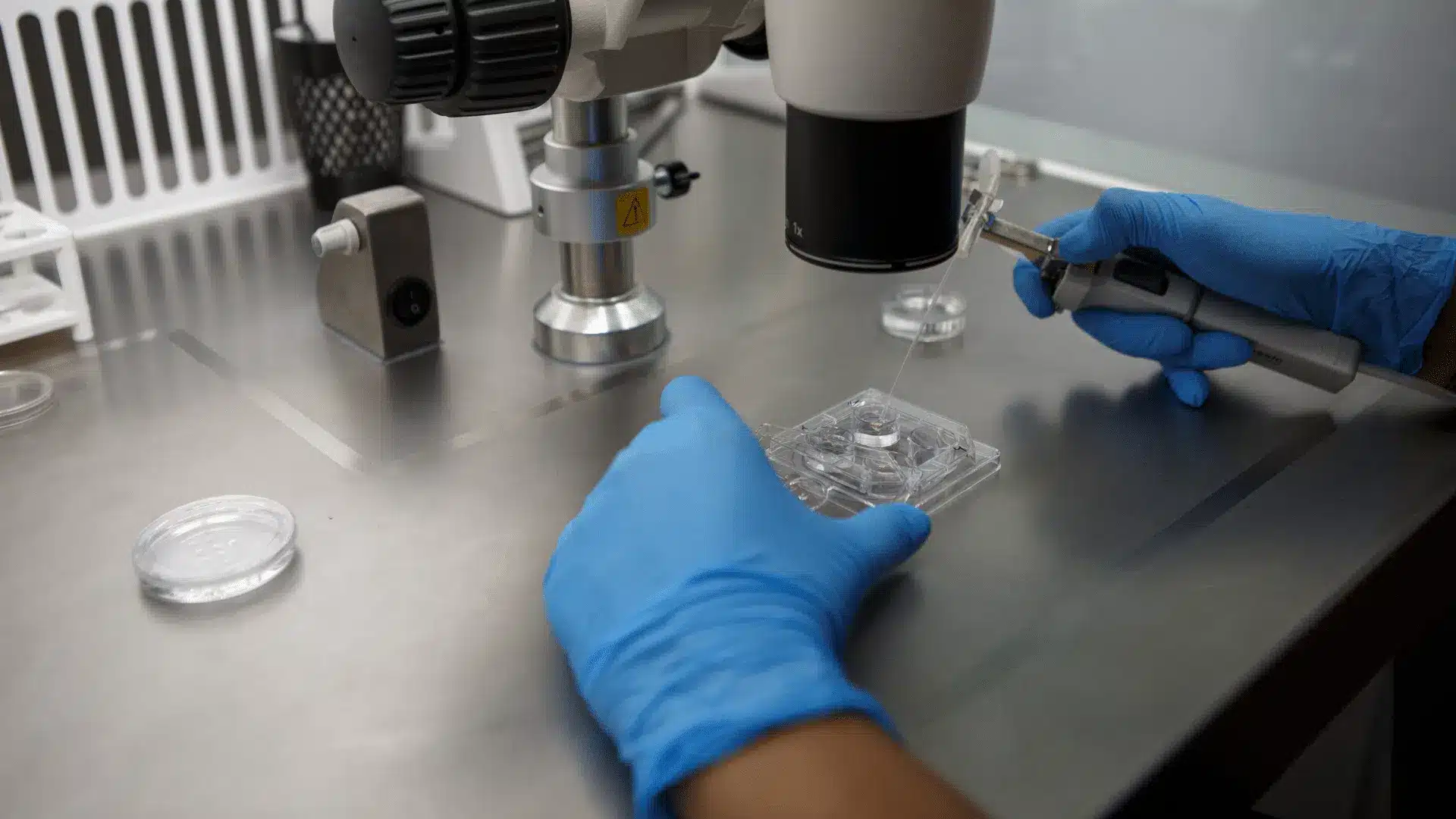
Since the first successful in vitro fertilisation (IVF) procedure in 1978, nearly 10 million babes have been created by bringing the miracle of conception into the laboratory. This assisted reproductive technology (ART) helps individuals and couples achieve pregnancy when natural conception is difficult. It sounds like a tremendous feat, but we have broken it down for you into bite-sized information, including how to prepare with your doctor, and all the steps for in vitro fertilisation (IVF) to the point of pregnancy testing, and the option of using frozen embryos.
The process begins with ovarian stimulation, where the woman is given hormonal medications to encourage the ovaries to produce multiple eggs instead of the single egg typically released during a natural cycle. This stage is carefully monitored using blood tests and ultrasound scans to track follicle development and ensure the body is responding appropriately.
Once the eggs are mature, the next step is egg retrieval, also known as follicular aspiration. This is a minor medical procedure performed under sedation, where a thin needle is guided through the vaginal wall into the ovaries to collect the eggs. The procedure is relatively quick and minimally invasive, usually taking around 10 to 15 minutes.
At the same time, a sperm sample is collected from the male partner or donor. The sperm is then processed in the laboratory to isolate the healthiest and most motile sperm cells for fertilisation.
Fertilisation takes place in the lab, where eggs and sperm are combined. This can occur through conventional IVF, where sperm are placed around the egg, or through intracytoplasmic sperm injection (ICSI), where a single sperm is directly injected into an egg. The goal is to maximise the chances of successful fertilisation.
After fertilisation, the resulting embryos are cultured in a controlled laboratory environment for several days. During this time, embryologists monitor their development, assessing quality and growth to identify the most viable embryos for transfer.
The next stage is embryo transfer, where one or more embryos are placed into the uterus using a thin catheter. This procedure is typically simple, does not require anaesthesia, and feels similar to a routine gynaecological exam. If extra embryos are created, they can be frozen (cryopreserved) for future use, offering further chances at pregnancy without repeating the entire process.
Following the transfer, patients are usually advised to take it easy, avoiding strenuous activity while continuing prescribed medications to support implantation. However, most normal daily activities can still be maintained.
About two weeks after embryo transfer, a pregnancy test is performed to determine whether implantation was successful and pregnancy has occurred. IVF is not always successful on the first attempt, and multiple cycles may be needed. There may be emotional, physical, and financial strain during the journey, and it is very important to get medical guidance throughout the process.
Key Takeaway
IVF is a structured, multi-step process involving ovarian stimulation, egg retrieval, fertilisation, embryo culture, and transfer, designed to overcome fertility challenges and improve the chances of conception.
Watch this 4.5-minute video by the Cleveland Clinic that describes these processes so well.
