
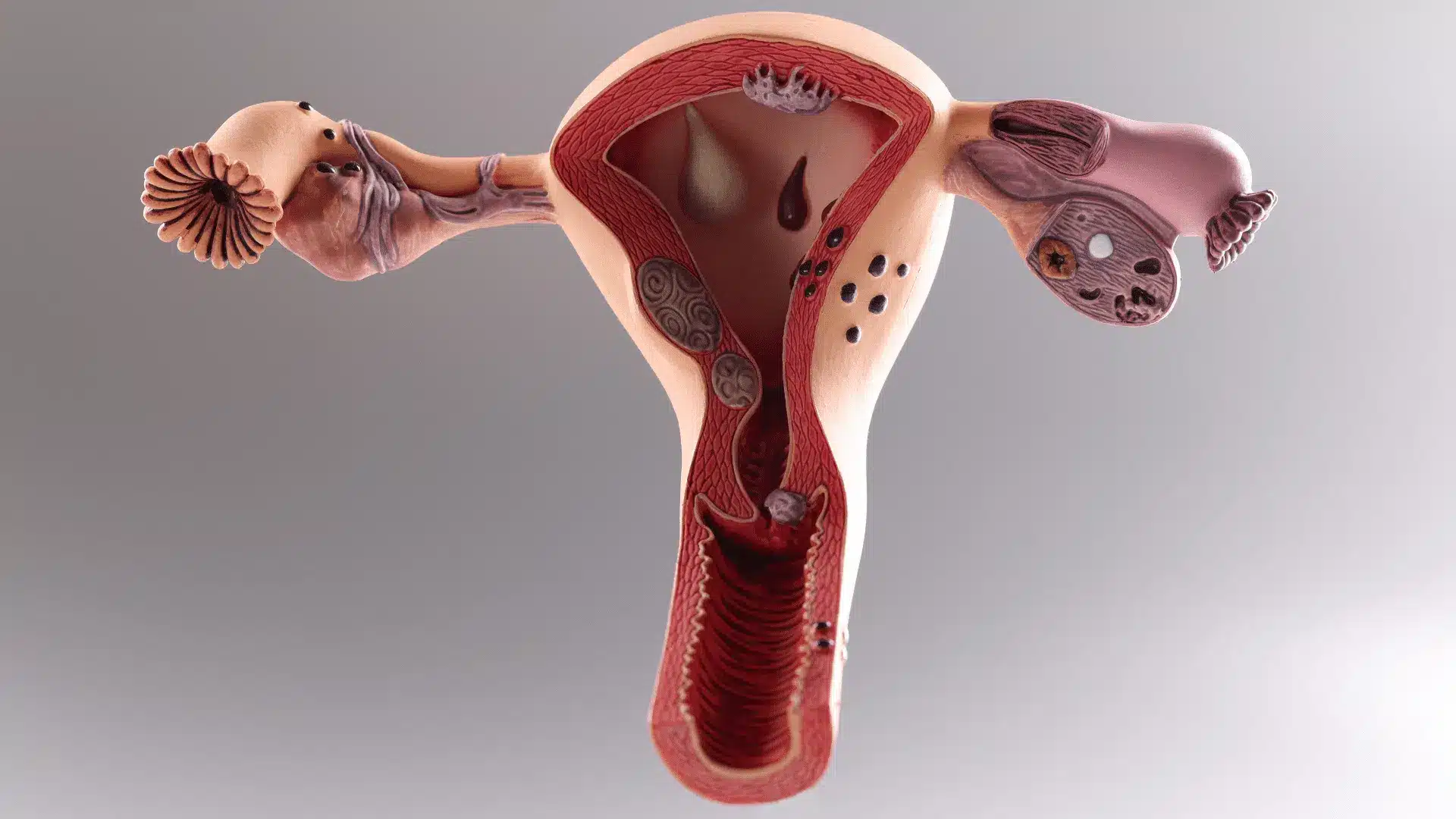
HyCoSy (Hysterosalpingo-Contrast Sonography) and HSG (Hysterosalpingography) are diagnostic procedures used to assess the health of the uterus and the patency (openness) of the fallopian tubes, primarily during fertility evaluations. The main differences lie in the imaging technology, contrast medium, radiation exposure, and potential for discomfort.
HyCoSy uses ultrasound with a saline or air contrast to assess the uterus and fallopian tubes, while HSG uses X-ray with a dye that can be visualised through X-ray. HyCoSy offers advantages like no radiation exposure, less pain, potentially detecting abnormalities in the uterus better, and allowing for in-office, single-visit evaluation. However, HSG is still considered effective, though HyCoSy is generally preferred for its safety and patient comfort.
HyCoSy (Hysterosalpingo-contrast sonography)
- Procedure: involves introducing saline or air bubbles into the uterus through a catheter and then using a transvaginal ultrasound to visualise the flow through the uterus and fallopian tubes.
- Technology: uses ultrasound, which is a safe, non-invasive imaging method.
- Benefits:
- no radiation exposure
- generally, less painful and better tolerated by patients compared to HSG
- can provide detailed, live imaging of the uterine cavity and fallopian tubes
- may detect intrauterine abnormalities better than HSG
- can be performed as an outpatient procedure
- Downsides: Some studies have reported conflicting results on its diagnostic performance compared to HSG, and it may not offer the same level of detail for the fallopian tubes as HSG in some cases.
HSG (Hysterosalpingography)
- Procedure: involves introducing a dye that can be detected through X-ray, through a catheter into the uterus.
- Technology: uses an X-ray machine to view the uterine cavity and fallopian tubes.
- Benefits:
- Provides a thorough evaluation of the uterus and fallopian tubes.
- Downsides:
- involves radiation exposure to the ovaries
- can be associated with greater pain and discomfort than HyCoSy
- uses a dye that can cause allergic reactions
Key Differences Summarised
| Feature | HyCoSy | HSG |
|---|---|---|
| Imaging | Ultrasound in a doctor’s office | X-ray needs a visit to the Radiology |
| Contrast | Saline or air bubbles | Radio-opaque dye |
| Radiation | No | Yes |
| Pain Level | Generally less | Can be more painful |
| Evaluation | Uterus, fallopian tubes, ovaries | Uterus and fallopian tubes |
Read more about these methods in this article by Create Fertility. In conclusion, HyCoSy is often preferred as a first-line test due to its superior safety profile, lower cost, and better patient experience, although the accuracy of both procedures can be comparable.
HyCoSy scans are regularly available at Harley Street Fertility Centre Kenya. Book as consultation with us here, for an assessment with our Fertility Specialists.

