
Both intrauterine insemination (IUI) and in vitro fertilisation (IVF) are fertility treatments managed by fertility specialists for people who have trouble conceiving naturally with their own sperm and eggs. The techniques are also used when donor sperm is needed, as in the case of IUI, when the partner’s sperm quality is a concern, or when donor sperm, eggs or embryos are needed in the case of IVF, when either or both partners have conditions where they cannot use their own sperm or egg. The treatments may also be used for same-sex couples or individuals who are single by choice.
It is a simpler process where sperm is placed directly into the uterus to increase the chance of reaching the egg. A sperm sample is “washed” and concentrated. It is then inserted into the uterus using a thin catheter during ovulation. The procedure of inserting the sperm into the uterus takes about 5–10 minutes and is done in a clinic. Sometimes fertility drugs are used to stimulate ovulation to improve the chances of fertilisation. Key: fertilisation happens inside the body.
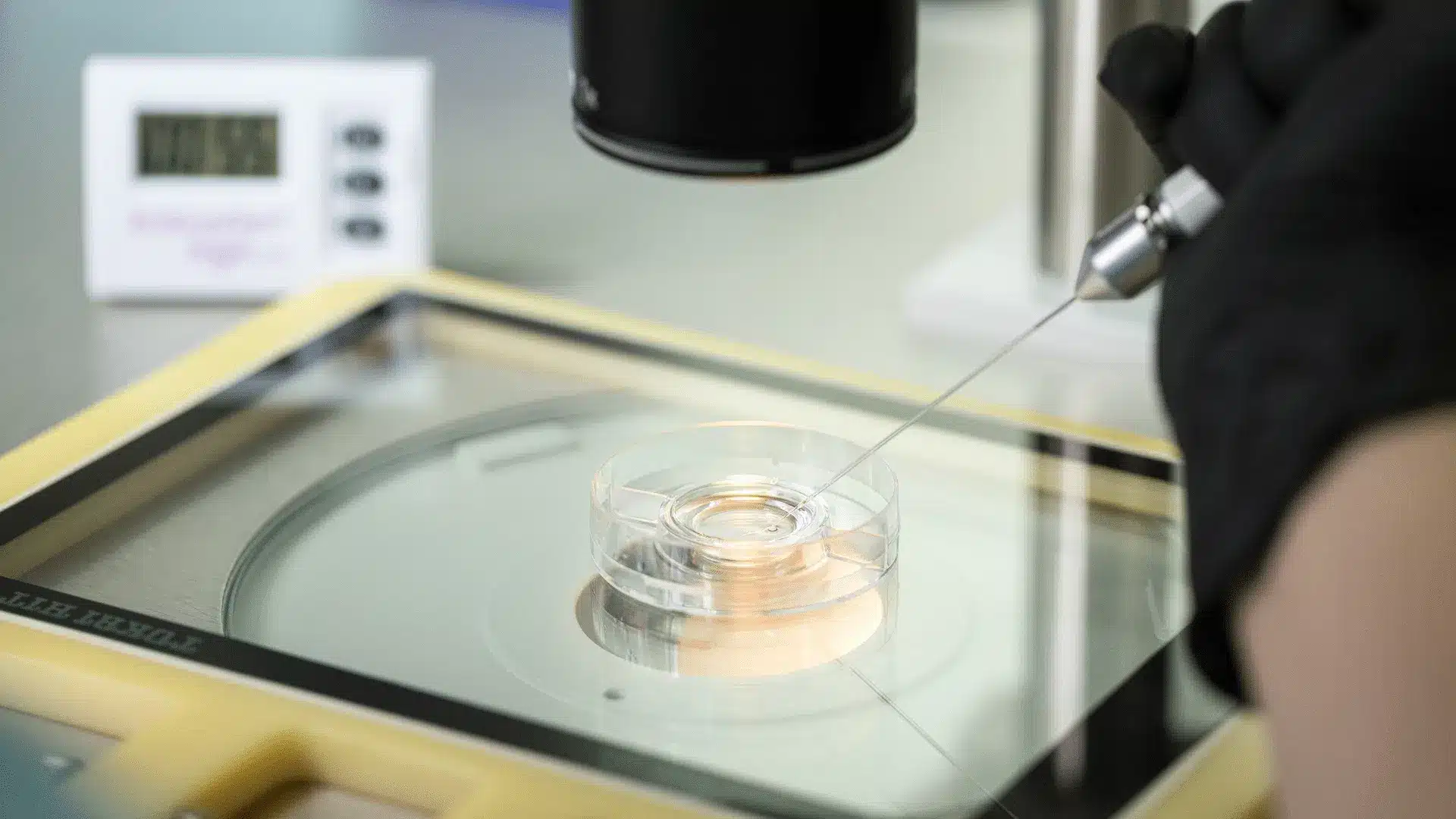
It is a more complex procedure where eggs are retrieved, fertilised with sperm in a lab, and the resulting embryo is placed into the uterus. It works by using hormones to stimulate the ovaries to produce multiple eggs. Eggs are then retrieved via a minor surgical procedure, and the eggs and sperm are combined in a lab to form embryos. One or more developed embryos are transferred into the uterus or frozen, for later transfer based on individual circumstances.
Key: fertilisation happens outside the body (in a lab).
WHEN EACH IS RECOMMENDED
IUI is usually tried first if the cause of infertility has not been identified, there is mild male infertility, or the individual and couple’s circumstances do not require advanced treatment. It is tried first because it is less invasive, less expensive and simpler to perform.
IVF is recommended if IUI fails after about 2 to 3 cycles or when there are more complex issues, such as:
- Blocked fallopian tubes
- Severe male infertility
- Endometriosis
- Recurrent miscarriages
Doctors may also skip IUI and go straight to IVF depending on age, health, and fertility goals.
SUCCESS RATES
IUI
About 15 to 20% success per cycle. Cumulative success after 3 to 4 cycles can reach 40 to 50%
IVF
Around 50 to 75% success per cycle. IVF generally has higher success, but outcomes depend heavily on age, health, and underlying fertility issues. Some people need multiple cycles.
| Aspect | IUI | IVF |
|---|---|---|
| Complexity | Simple | Multi-step, complex |
| Invasiveness | Minimal | More invasive (surgery + hormones) |
| Cost | Lower | Much higher |
| Where fertilisation happens | Inside body | In a lab |
| Success rate | Lower per cycle | Higher per cycle |
CHOOSING BETWEEN IUI AND IVF
There’s no one-size-fits-all answer. Some of the considerations that doctors make are about the age of the patient and the impact on the quality of egg, sperm and uterine environment to allow for embryo attachment. Other considerations are the cause of infertility, medical history, patient preferences and desired family size. It is a personalised decision based on all these considerations.
IF NEITHER WORKS
If both IUI and IVF fail, options like donor egg IVF may be considered. This involves using another person’s eggs to create embryos. Use of donor embryos may also be an option, if available.
BOTTOM LINE
IUI = simpler, cheaper, first-line option
IVF = more complex, more effective, used when IUI fails or isn’t suitable
Both treatments can take multiple attempts, and success is not guaranteed. It is often a long process requiring patience and medical guidance.
Read more about the differences in IUI and IVF in this article by The Cleveland Clinic.
