
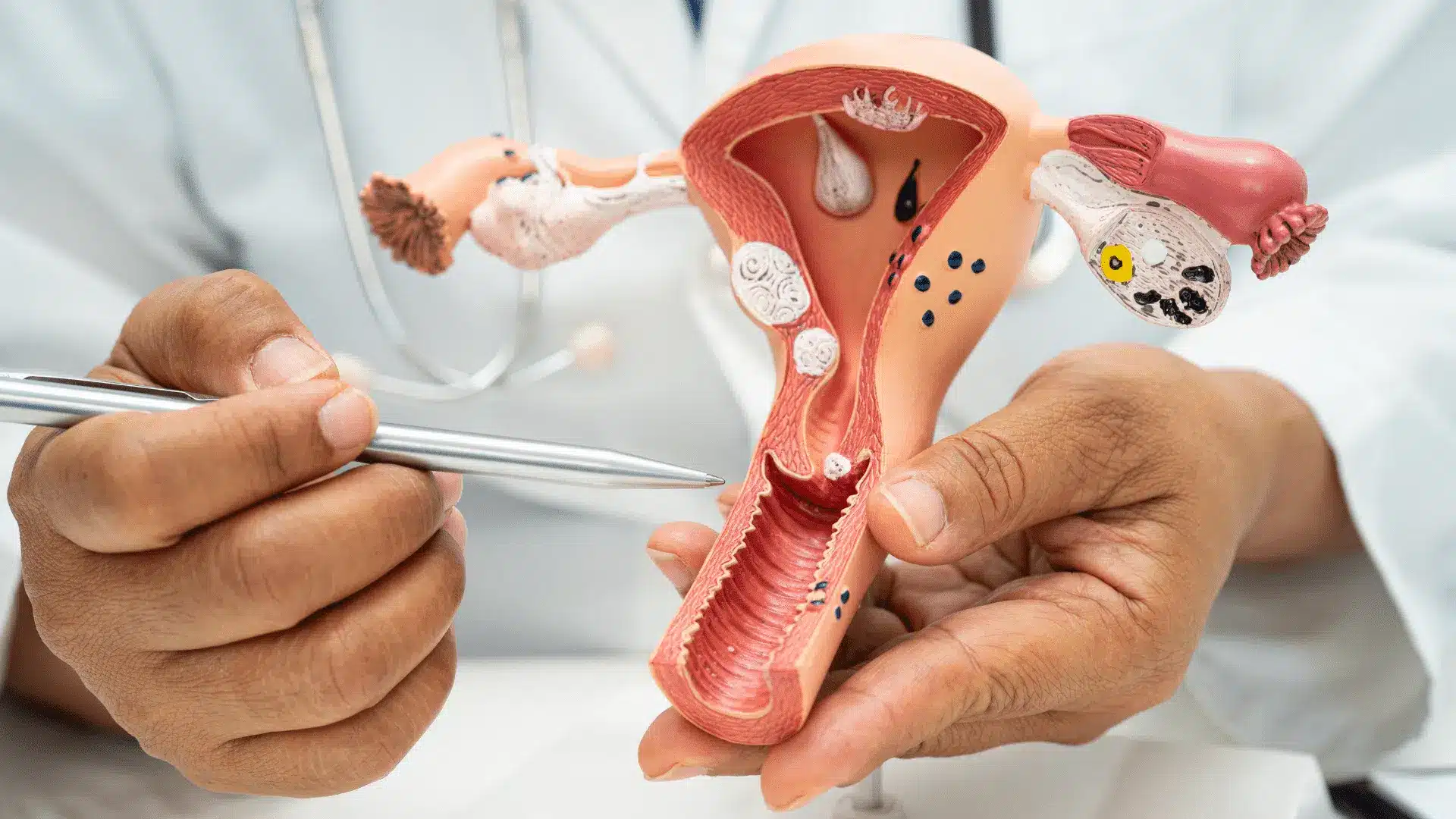
Uterine polyps are noncancerous growths on or in the uterus. Endometrial polyps are those that grow from the inner lining of the uterus and can impact fertility by causing physical blockages, creating chronic inflammation, and altering the environment in the uterus. While small polyps may not affect conception, larger or multiple polyps are often linked to subfertility (fertility issues), recurrent implantation failure, and miscarriage.
What are uterine polyps?
Uterine polyps that can affect fertility are growths that develop in the lining of the uterus (the endometrium). They vary in size from only a few millimetres to several centimetres in size. Most are benign (noncancerous), though a small percentage can become precancerous or cancerous, particularly after menopause. Many women have no symptoms, while others experience irregular bleeding, spotting between periods, or heavier menstrual flow.
Who is at risk?
Factors that have been associated with increased risk of developing polyps include hormonal imbalances, especially excess oestrogen, obesity, high blood pressure, use of medications such as tamoxifen for breast cancer treatment and advanced age.
Symptoms and When to Seek Advice
In many cases, polyps may cause no symptoms at all and are only discovered during fertility investigations or routine scans. Some of the symptoms associated with uterine polyps include irregular menstrual bleeding, spotting between periods, heavier or longer periods, bleeding after intercourse and difficulty conceiving. Consulting a gynaecologist, a reproductive endocrinologist or a fertility specialist is recommended if you experience any of these symptoms.
How Polyps Interfere with Fertility
- Implantation Disruption: Polyps can alter the shape of the uterus cavity, making it physically difficult for an embryo to successfully attach and grow.
- Chronic Inflammation: The presence of a polyp can cause swelling in the surrounding endometrium, creating a hostile environment for early pregnancy.
- Physical Obstruction: Depending on their size and location, polyps can physically block the fallopian tube openings or the cervix, preventing sperm from reaching the egg.
- Hormone disruption: Polyps can change the hormone balance needed to support implantation and early pregnancy.
Diagnosis
- Transvaginal ultrasounds are the first-line imaging test to detect uterine polyps.
- Endometrial biopsy is the extraction of endometrial material to help exclude cancer, though small polyps can sometimes be missed.
- Hysterosalpingogram (HSG) is an X-ray study using contrast dye to evaluate the uterus and fallopian tubes.
- Sonohysterography or hysterosalpingo-contrast sonography (HyCoSy) uses ultrasound and sterile fluid to better visualise the uterine lining for the presence of polyps.
Treatment options
Treatment depends on symptoms, polyp size, and reproductive goals. The options are:
- Watchful waiting: Small, symptom-free polyps may be monitored because some can shrink or resolve themselves.
- Medication: Hormonal medications such as progestins or GnRH agonists may reduce symptoms temporarily, but they do not provide a permanent solution.
- Hysteroscopic polypectomy: Hysteroscopy uses a camera that is inserted through the cervix, allowing direct viewing and often surgical removal of polyps known as polypectomy. It is a minimally invasive procedure and is the gold standard for treatment.
Research indicates that removing polyps can significantly improve pregnancy rates up to 63% from 28% when polyps remain untreated, both for natural conception and treatments like intrauterine insemination (IUI) or in vitro fertilisation (IVF).
Key takeaway
Uterine polyps are common and usually noncancerous, but they can negatively affect fertility by interfering with sperm transport, embryo implantation, and the uterine environment. Because they are often treatable through minimally invasive hysteroscopic removal, identifying and managing polyps can be an important step for people experiencing infertility or preparing for assisted reproductive treatments like IUI and IVF.
This Indiana Fertility Institute’s blog gives more information on uterine polyps and infertility.
