
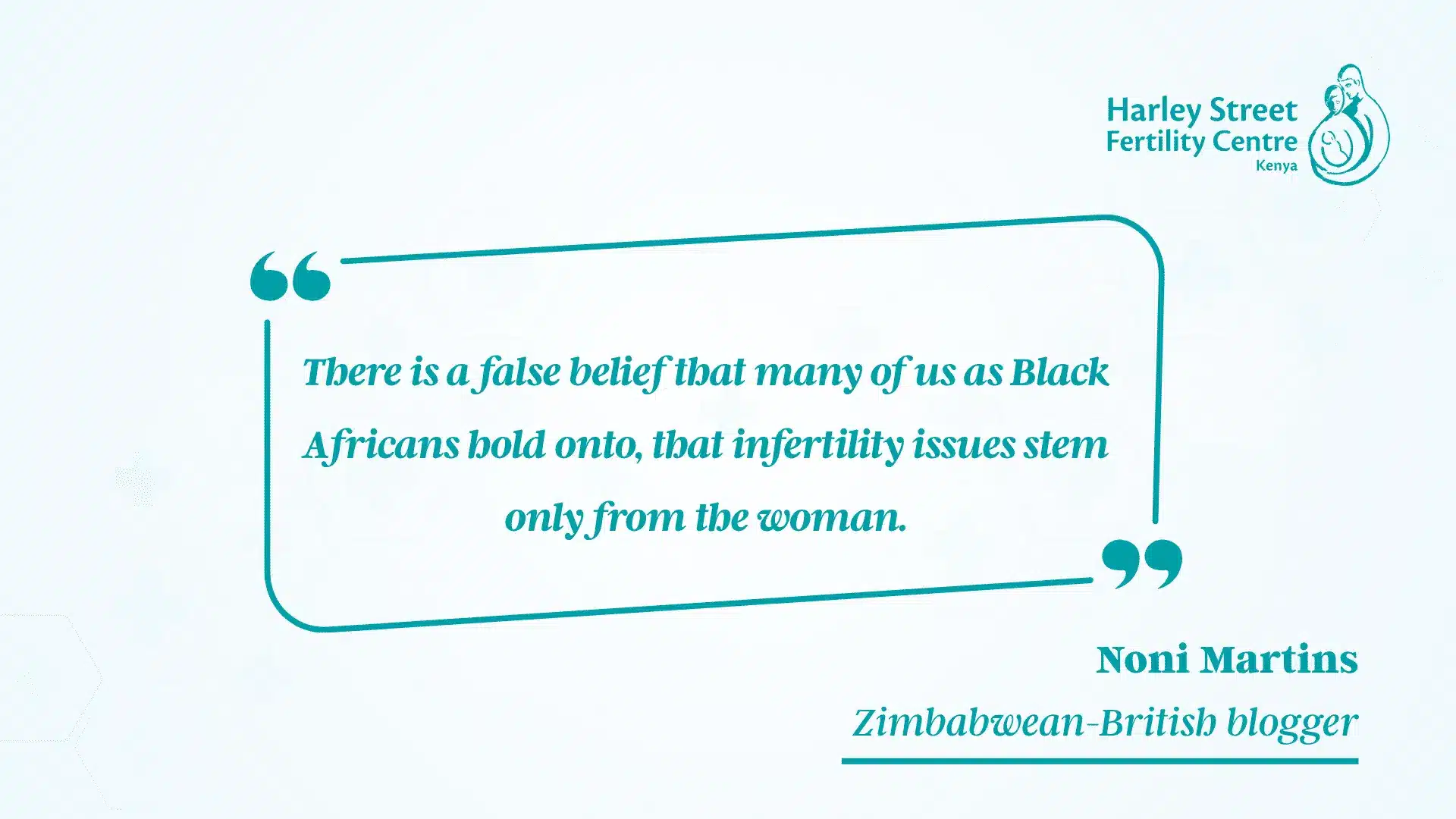
This is a real-life rendition by Noni Martins, blogger and IVF patient, of the impact infertility can have on self-image and the relationship between a couple, as well as the toll it can take mentally and physically on couples.
She speaks of her personal experience of infertility over the years, embedded in the Zimbabwean culture, despite her exposure to information, leaving her playing the self-blame game. She shares a deeply personal account of infertility, focusing on how cultural expectations, identity, and stigma shaped her experience. Growing up in Zimbabwe, she was raised with strong beliefs that a woman’s identity is tied to marriage, motherhood and continuing a family lineage. Because of this, infertility felt like a threat to her womanhood and identity, even though she intellectually knew this shouldn’t be the case.
Cultural pressure and self-blame
Despite being educated and informed, she internalised a common cultural belief that infertility is usually the woman’s fault. This led her to assume something was wrong with her, feel shame and inadequacy, and compare herself to peers and family members who had children easily. She spent years trying to rationalise why she wasn’t getting pregnant, even becoming “irrational” in her attempts to make sense of it. A key insight she highlights is that many Black African communities wrongly assume infertility comes from women.
Delay in seeking help
For over two and a half years, she avoided seeking medical help due to denial, fear and cultural conditioning. It was only after a hospital visit for severe pelvic pain that a nurse referred her for fertility evaluation. She reflects that without that intervention, she might have delayed help even longer, showing how stigma can prevent timely medical care.
Diagnosis: Male-factor infertility
Eventually, the couple discovered that the infertility issue was male-factor, related to her husband’s low sperm count. This forced her to confront her bias and assumptions, where she had blamed herself purely because she was a woman, and that she hadn’t even considered her husband as a possible cause. This realisation was both rye-opening and emotionally complex. It challenged deeply ingrained cultural narratives about gender and fertility.
Emotional impact and relationship dynamics
Even after learning the cause, she struggled with guilt, now about her husband’s condition and felt pressured to be a “supportive wife” and not burden him emotionally. Her husband’s health history (including long-term dialysis) added another layer of emotional weight. This highlights how infertility affects both partners, relationship dynamics, and emotional roles shaped by culture.
IVF journey and emotional toll
The couple underwent IVF treatment, which brought physical strain (hormones, injections), emotional ups and downs and delays due to COVID-19. After years of trying and months of treatment, their first embryo transfer failed. At that point, she felt emotionally exhausted, lost hope and struggled to support her partner as she had before. The experience is described as a mix of grief, loss, and emotional depletion.
Challenging the “linear” fertility narrative
She critiques the common societal belief that pregnancy is straightforward and guaranteed. Her experience shows that fertility journeys are often non-linear, complex, and uncertain. The unrealistic narrative contributes to silence, shame, and isolation for those struggling.
Key themes and insights
- Infertility and identity: infertility can deeply affect self-worth, cultural identity and perception of womanhood
- Gendered blame: women are often unfairly blamed, while male infertility is overlooked or ignored
- Cultural stigma: silence around infertility prevents open discussion and leads to delayed treatment and emotional suffering
- Emotional complexity: Infertility involves grief, guilt, relationship strain and loss of expectations
- Importance of awareness and openness: the author emphasises the need to break stigma, share stories and normalise conversations about infertility
Final takeaway
Even as an informed, modern woman, the author still blamed herself due to deep cultural conditioning. Her journey reveals how infertility is not just medical, it’s also psychological, cultural, and emotional, and breaking stigma is key to better support and understanding.
Read her blog here with the hope that those struggling with infertility realise that they are not alone in their journey, while each couple/person’s journey is unique to them.
