
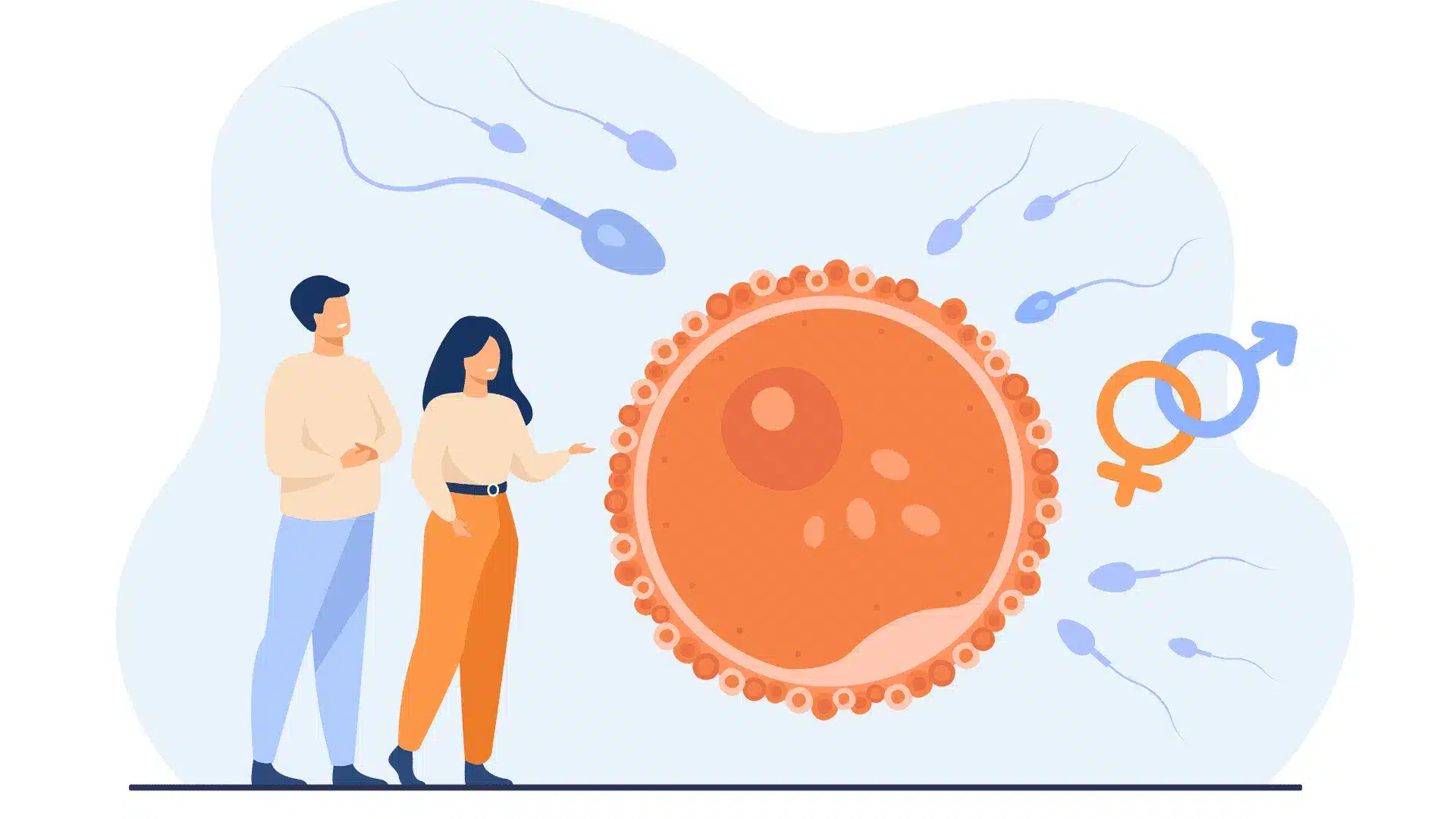
Fertilisation happens in the Fallopian tubes. Implantation should occur in the uterine wall, but can happen in the Fallopian tubes, which becomes an emergency. Learn more about detecting and monitoring fertilisation and pregnancy.
Fertilisation & implantation
-
Where fertilisation occurs: A sperm meets an egg in the ampulla (middle segment) of the fallopian tube, not the uterus or ovary. After fertilisation, the resulting zygote travels down the tube and implants in the uterus as a blastocyst.
-
Implantation timing: Occurs about 6–12 days after ovulation/conception, marking the start of pregnancy when the embryo burrows into the uterine lining.
-
Ectopic pregnancy risk: If the embryo implants outside the uterus, most often in the fallopian tube, it’s a medical emergency requiring prompt attention.
hCG hormone: role & tracking
-
What is hCG?
It’s a hormone secreted by trophoblast/placental cells after implantation. It sustains the corpus luteum and promotes progesterone synthesis to maintain early pregnancy. -
Detection & early rise:
-
Blood tests can detect hCG around 6–10 days post-ovulation; urine tests detect it a few days later.
-
Quantitative levels over 5 mIU/mL suggest pregnancy; healthy pregnancies double hCG roughly every 2–3 days in early weeks.
-
-
Interpretation of trends:
-
Appropriate rise: A doubling time of 48–72 hours is typical for a viable intrauterine pregnancy.
-
Slow or declining levels: May signal miscarriage or ectopic pregnancy when hCG doesn’t rise as expected or falls.
-
-
Peak & decline:
Levels usually reach a peak around 8–10 weeks, then decline and stabilise throughout the remainder of pregnancy.
Practical takeaway
-
Fertilisation: Takes place in the fallopian tube.
-
Implantation: Occurs approximately 6–12 days after ovulation.
-
hCG Detection: Blood tests can detect hCG around 6–10 days post-ovulation; urine tests detect it slightly later.
-
Monitoring: In healthy pregnancies, hCG levels typically double every 2–3 days.
-
Warning Signs: Slow-rising or falling hCG levels may indicate an ectopic pregnancy or pregnancy loss.
Understanding fertilisation, implantation timing, and hCG patterns is crucial for early pregnancy tracking, accurate pregnancy testing, and timely intervention if complications are suspected.
Read more about fertilisation in this article by Healthline.
